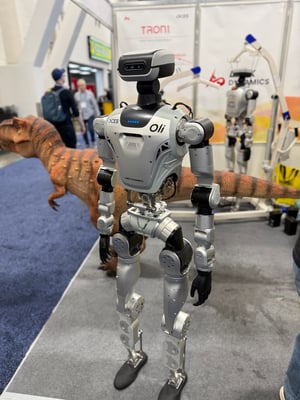


What CES 2026 Revealed About the Future of AI and Technology
CCi Voice | January 28, 2026 | 7 min read
Why CES 2026 Matters to Business and Technology Leaders
People sometimes ask why I attend CES at all, especially as the owner of a communications, networking, and security company.
For me, this show is part of my responsibility as a CEO. Research and development does not only happen in labs or conference rooms. It happens by seeing patterns early, understanding where technology is heading, and thinking about how those developments will affect customers long before they become mainstream.
CES is one of the few places where consumer technology, enterprise systems, industrial machinery, healthcare, mobility, and infrastructure all collide. When you walk the floor long enough, you stop seeing individual products and start seeing direction.
That direction was very clear this year.
CES 2026 Technology Trends Viewed Through a Business Lens
CES is often labeled a consumer electronics show, but that label misses the bigger picture. While there were plenty of consumer products, what I paid attention to were the underlying technologies that eventually move into business, municipal, and infrastructure environments.
AI was everywhere. But the real question I kept asking was whether it had become useful yet.
This year, the answer felt like yes.
We saw meaningful improvements in business productivity tools, networking systems, wireless technologies, and embedded intelligence. These were not proof-of-concept demos. These were systems designed to operate reliably in real-world conditions.
That distinction matters when technology leaves the lab and becomes something people depend on.

Global Technology Innovation Trends Shaping the Future of AI
One thing that stood out to both Cooper and me was how much innovation is now coming from South Korea, China, and Taiwan.
Historically, a familiar pattern was that American companies invented something and others perfected it and took it to market. Walking the CES floor this year, that pattern felt outdated. Many of the companies driving robotics, AI hardware, wearables, drones, and home automation are now leading innovation outright.
That has real implications for U.S. competitiveness and for how seriously we need to take STEM education if we want to keep pace. This was not a one-off impression. It was visible booth after booth.



Practical AI in Everyday Technology
Not everything that impressed us was industrial. Some of the most compelling examples were everyday machines becoming genuinely smarter.
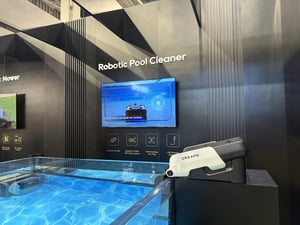
Pool cleaning robots from companies like Dreame and Aiper now use cordless, autonomous operation with vision systems and LiDAR to detect debris and clean intentionally. Some models can climb out of the pool on their own and recharge using either a cord or a solar panel. That is thoughtful design, not a gimmick.
Health Technology Trends at CES 2026: From Data Collection to Action
Health tech was everywhere at CES, and for the first time it felt mature.
Wearables are no longer just collecting endless streams of data. They are summarizing information using AI and integrating that insight directly into electronic medical records (EMR). Instead of overwhelming users and clinicians with numbers, these systems are starting to provide context. Healthcare providers and innovators have fully adopted CES as their venue of choice to find and introduce products to make us healthier.
Smart rings were especially prevalent. We counted eight or nine companies offering them. Some now integrate continuous monitoring and blood testing. One of the many that also offers blood tests is Ultrahuman. The shift from raw data to usable insight felt like a real step forward.

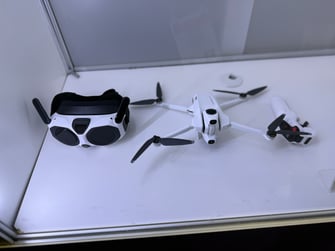
Claims to be the first 8K 360-degree drone.
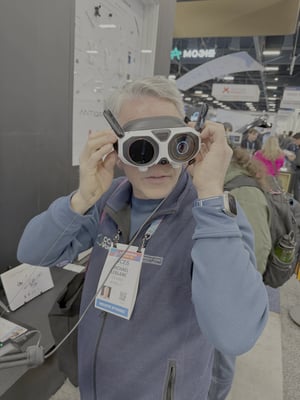
We saw footage from their VR goggles and tried out the very easy and natural controller (not a joystick). Wow!

Conference Room and Collaboration Technology Trends
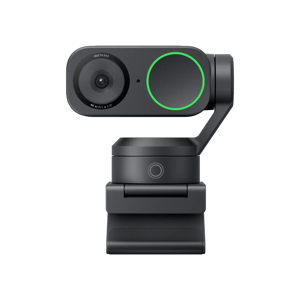
One moment at CES that really hit home for me was seeing how far conference room cameras have come. Many of you know how much we have liked the Owl Pro 360-degree camera over the years. Then we saw what Insta360 is doing.
Their new Link 2 conference camera honestly puts the Owl to shame at a fraction of the price. It delivers sharper video, smarter framing, and a level of polish that used to require much more expensive hardware.
You can find it on Amazon, but if you go directly to the Insta360 site, they gave us a CES discount code. CES2026 takes 20 percent off their regular price. Yes, this is another product we bought at the show. It is a great example of how professional-grade technology is becoming more accessible without sacrificing quality.
The Hidden Infrastructure Powering Modern Technology
One of the most important parts of CES is also the least flashy.
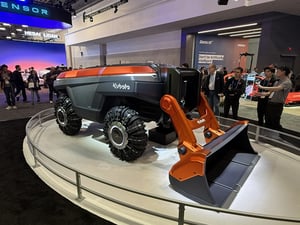
OEMs building LiDAR systems, batteries, chips, and sensors filled entire halls. These companies are building the components that make physical AI possible.
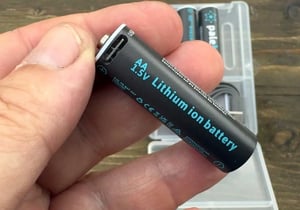
Ostation made the Ecolast 1.5v AA smart rechargeable Lithium-ion batteries.
Mark my words! Soon you will see AA and AAA batteries everywhere that you recharge with a USB-C cord. GAME CHANGER! No more buying 100 packs from Amazon and polluting the environment. We saw at least 5 companies offering AA/AAA batteries with USB-C plug-in.
Apparently Home Depot offers some now!
Amazon’s Role in AI, Security, and Connectivity Infrastructure
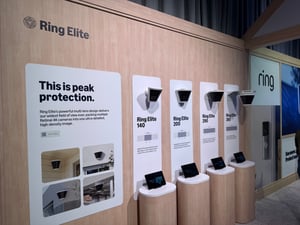
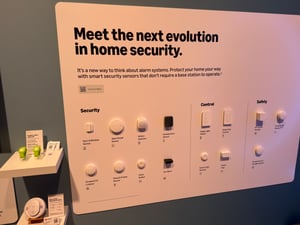
New tech from Amazon is heating things up. The Ring camera is getting a massive upgrade. Now they have panoramic models up to a 360-degree field of view. This is coming closer to the commercial cameras we sell at CCi Voice, but of course these are for home-use.
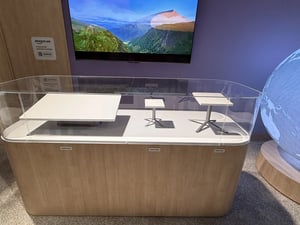
They will also be launching their own Starlink-style satellite Internet service called Amazon LEO (“low-earth-orbit,” I presume).
They will have three sizes of antennas, relating to the speed they offer (100mb, 400mb or 1 Gigabit). I'm sure you know that Jeff Bezos, Amazon's founder, launched Blue Origin to launch rockets to space. He is using both SpaceX and his own company to launch his satellites. No word on pricing or dates of go-live yet.



Notable CES 2026 Technology
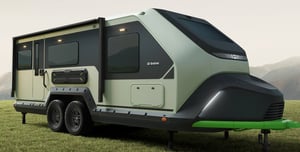
My parents used to have a 40-foot RV they drove around the country. Nothing like having everything with you, right? We saw an upscale and VERY high-tech version of an RV that has all the bells and whistles.
In the same category, we found a product from Evotrex - a luxurious camping trailer with a gas power electric generator to extend the range of an EV truck with a power hookup cable.
Sports and Performance Technology Trends at CES 2026
I was hoping for more golf tech, but a few things stood out.
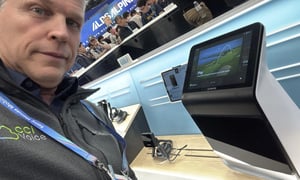
The Garmin Approach R50 remains my favorite simulator and launch monitor. It is currently the highest rated (and extremely affordable at under $5K) unit that does not need a PC (it’s built-in). Someday soon we plan to add this in our room above the garage.
We also saw an Innovation Award winner called G-Grip Pro, which uses sensors in a golf club to provide verbal coaching feedback after only a handful of swings. That kind of feedback feels closer to working with a real instructor.
Once again, AI was acting, not just reporting.
Consumer Technology That Signals Bigger Business Trends
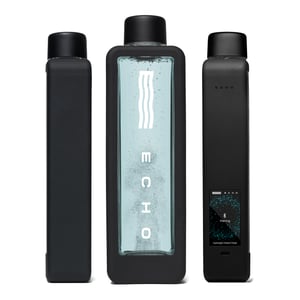
My absolute favorite new product (so much so that I bought one) is the Echo Flask, made by Echo Water. It’s a molecular hydrogen water bottle. It is a very easy to use water bottle that creates H2 (concentrated hydrogen — the H2 of H2O) to act as an antioxidant.
There are some clinical trials on this technology to improve our health, but it is still new. I have a larger one I keep in the office, but this one is compact and portable.
AI Infrastructure
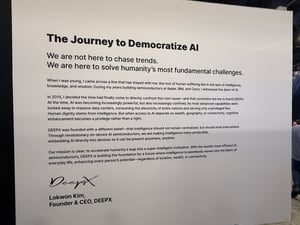
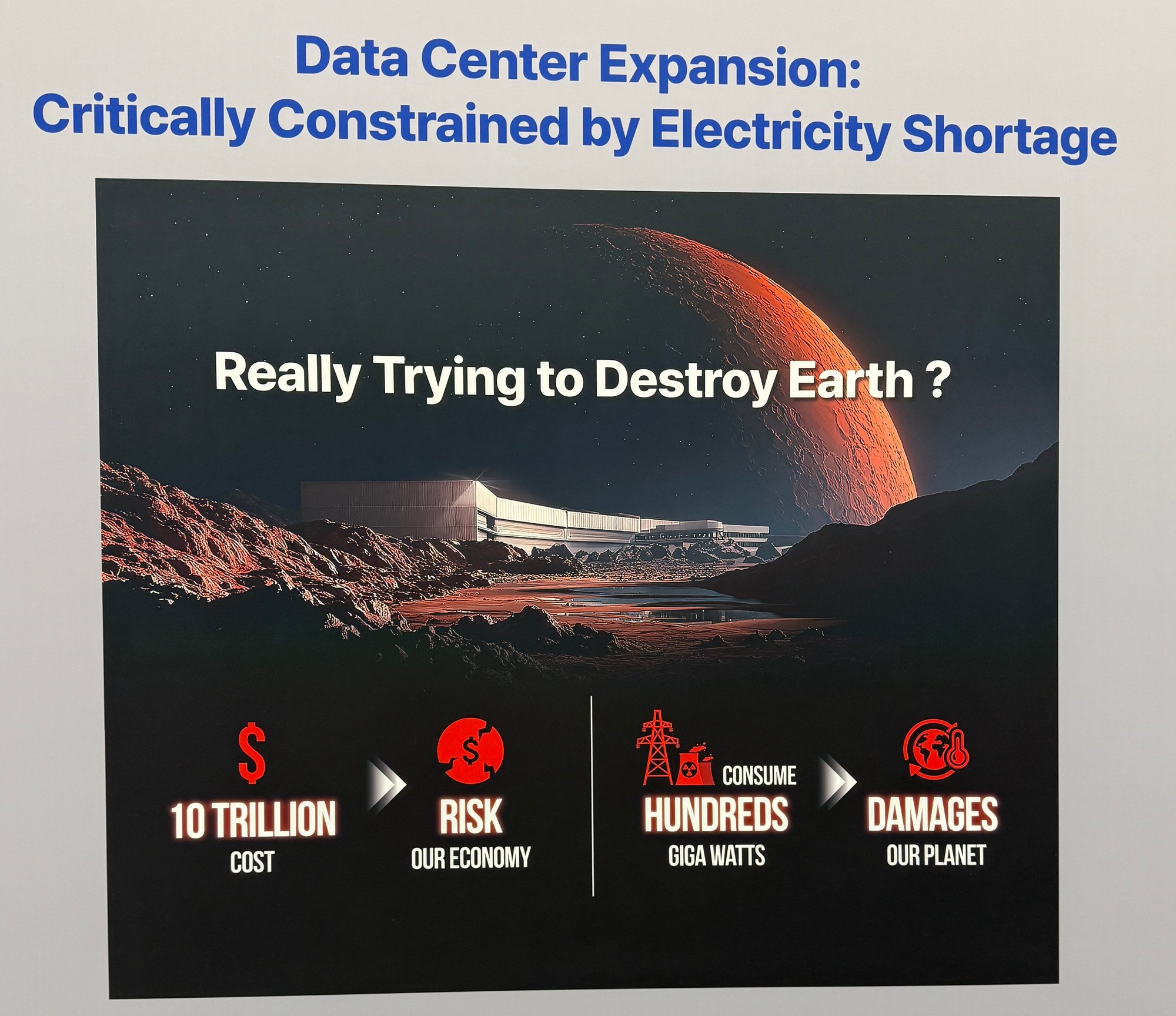
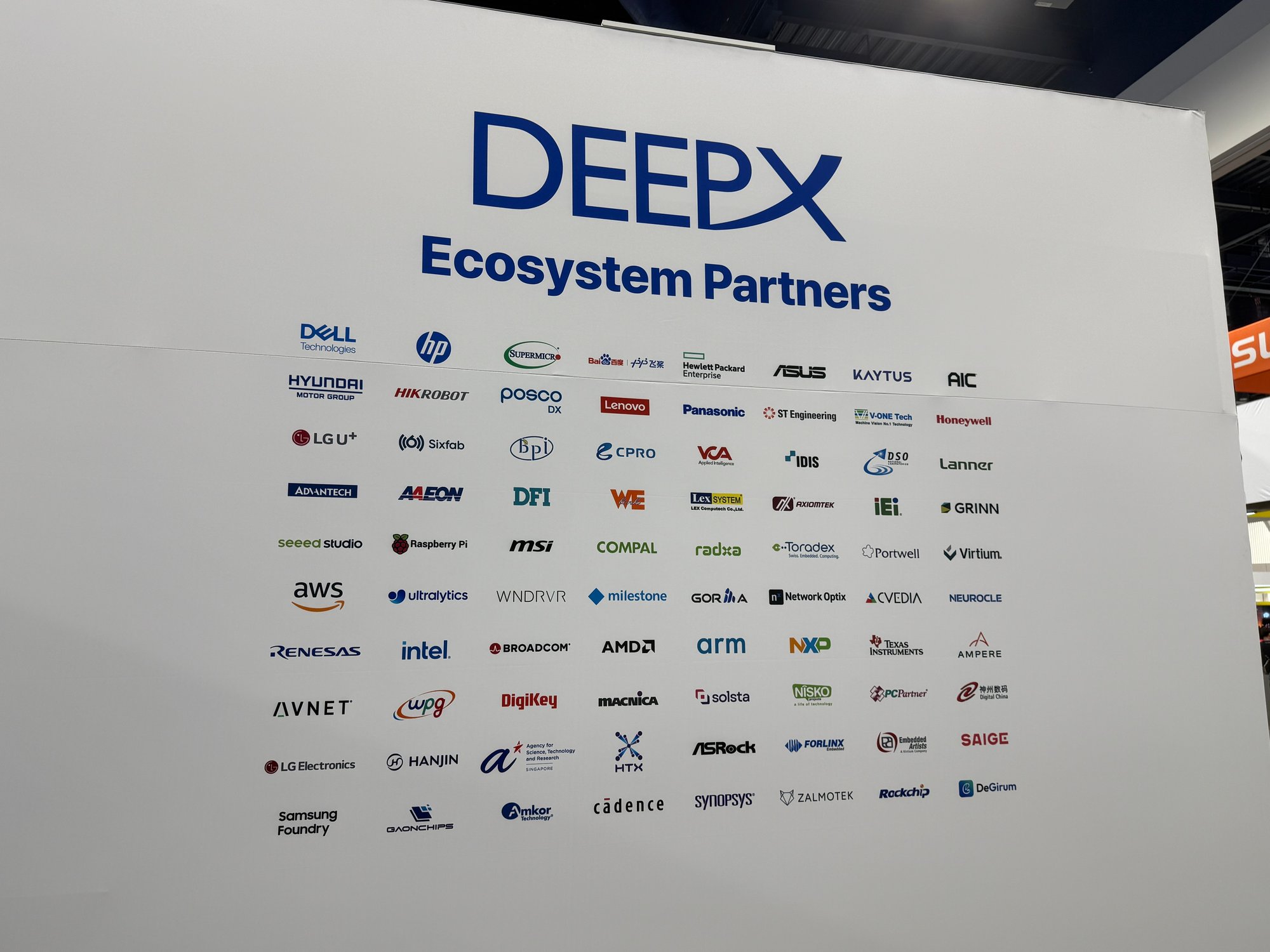
DEEPX is a very valuable consortium of most of the tech companies we all know and use today. It started 10 years ago. Its founder spent decades in the data center/semiconductor industry… enough to know that we were headed in the wrong direction for our environment.
Their mission is to move AI tech locally, to the hardware on your devices and not in cloud servers. This entire section of the show hall was dedicated to helping save the earth through innovative, DIFFERENT tech for AI. Fingers crossed!

What CES 2026 Reveals About the Future of Real-World AI
CES 2026 made one thing clear: we are entering an era where AI does not just assist, it acts.
That shift brings opportunity and responsibility. Reliability matters. Safety matters. Infrastructure matters. The companies that succeed will be the ones that understand how these technologies fit into real-world systems.